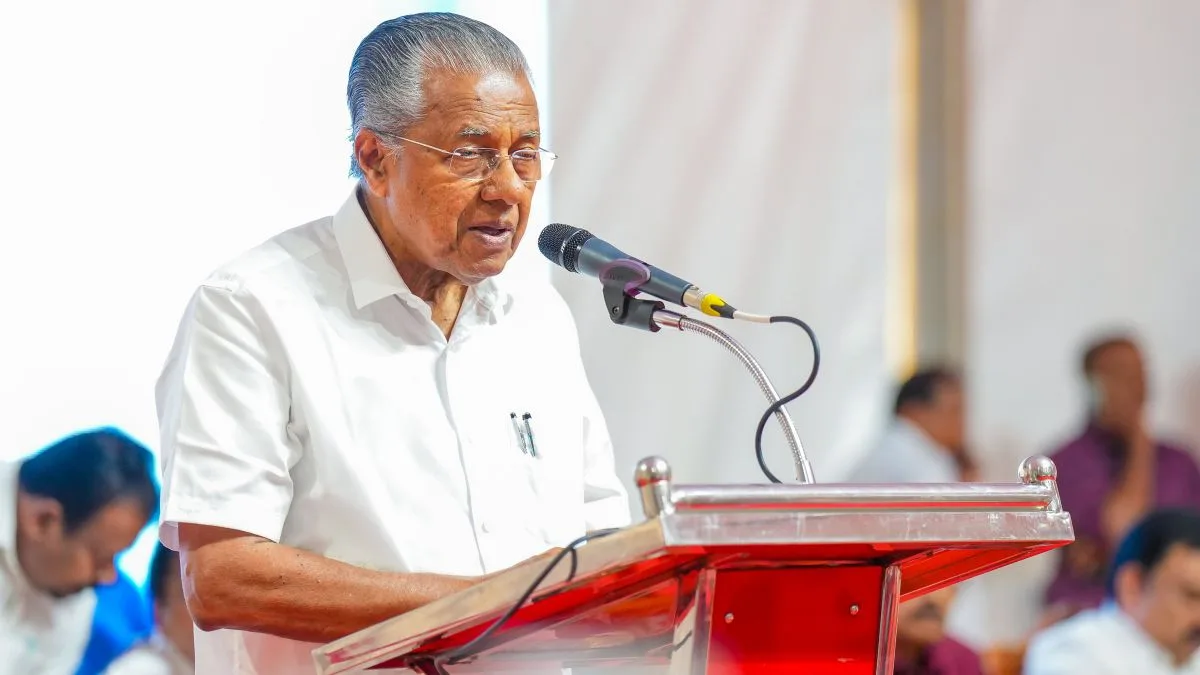
With the defeat of the Pinarayi Vijayan government in Kerala, the last bastion of the Left bloc in India is also gone. For the first time in five decades, the country will not have any chief minister representing the Left parties.
Kerala was the last stronghold of the Communist parties in the country after they lost power in West Bengal and Tripura.
Advertisement
Before the recent Assembly elections in Kerala, there were expectations among the Communists that Pinarayi Vijayan will somehow succeed in scraping through and retaining power, notwithstanding the stiff challenge from the Congress-led United Democratic Front (UDF). However, that was not to be, clearly reflecting the shrinking base of the Communists even in their bastions.
But Kerala is not the only state where the Left parties have fared poorly in the just-concluded Assembly polls. They have once again failed to secure any seat in West Bengal, a state which they ruled for 34 years before the Mamata Banerjee-led Trinamool Congress (TMC) dislodged them from power. The outcome of the West Bengal assembly polls shows a sharp decline in the traditional vote base of the left parties. The results, in fact, represent their continued marginalisation in a state, where the landscape is now dominated by its arch rival, the BJP.
In Tripura, 25 years of the uninterrupted rule by the Left parties ended in 2018 when the BJP and its local ally won the Assembly polls. The BJP got the better of the Left parties in the 2023 Assembly polls too.
The latest blow to the Left parties in Kerala is bound to further reduce their relevance in national politics. Comrades were once a dominant force in national politics and quite often punched above their weight. Who can forget the dominant role they played in bringing V P Singh to power in 1989 when his minority government relied entirely on the support of two ideologically opposite poles: BJP and the Left parties.
The Left parties also provided critical support to H D Deve Gowda and I K Gujral governments during the United Front coalition era in the late nineties.
After the 2004 Lok Sabha elections, when the Congress failed to get a majority, the Left parties helped the grand old party and provided outside support to the Manmohan Singh government. However, their regular interference in the functioning of the government was not appreciated by the Congress. The tipping point came when the Left parties opposed the proposed Indo-US nuclear deal while PM Manmohan Singh refused to make any compromise on the pact, saying it was in larger national interest. The Left finally withdrew support to the Manohan Singh government in 2009. The 2009 Lok Sabha elections saw Congress and its allies doing well beyond expectations and forming a government without requiring the support of the Left parties.
Since 2014, the graph of the Left parties has continuously been plummeting. The Left parties together got ten seats in 2014 and five in 2019. The CPI (M) and the CPI have six Lok Sabha MPs now while the CPI (ML) has two MPs from Bihar.